Messier's Observing Site
Hôtel de Cluny, Paris
N 48° 50' 55" E 2° 20' 39"
Charles Messier (1730-1817) left behind a catalogue of 110 observing targets that every
(amateur) astronomer wants to have seen at least once.
On 27 January 1991, the first object was logged in my observing journal; the last followed on
2 July 2011.
To mark the completion of the project, in 2011 I visited Charles Messier's observing site: the
Hôtel de Cluny in Paris.
Hôtel de Cluny
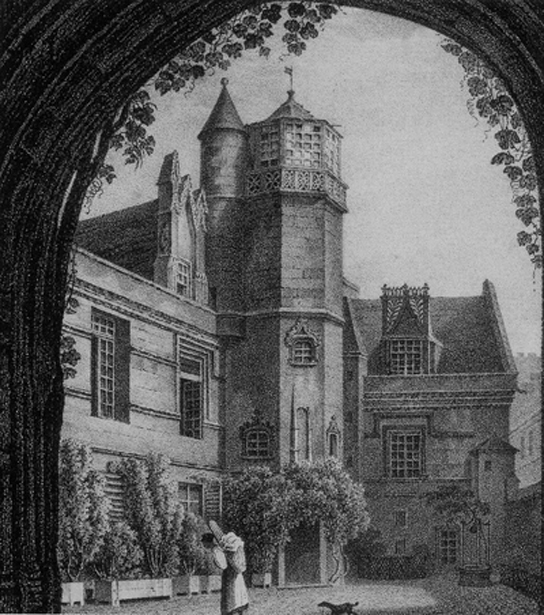
This engraving of Hôtel de Cluny dates from the early 19th century.
It still shows the observatory that Joseph-Nicolas Delisle had installed, at his own expense, on
the stairwell tower in 1746.
Unfortunately, it was later removed. I haven't been able to find out exactly when.

Hôtel de Cluny stands on Rue de la Sorbonne, in the Latin Quarter.
It took some puzzling to work out how to get there by metro.
Luckily, Marjan always figures it out.

First we spot the Sorbonne observatory, an old observatory on the roof of the university on
Rue Saint-Jacques. Beneath the tallest dome stands a 153mm telescope with a focal length of
2300mm (f/15), belonging to the Société astronomique de France, the French equivalent of the
KNVWS. Beneath the lower dome there was once a transit instrument.
On the other side of this complex lies Hôtel de Cluny.


As you turn the corner, you already catch sight of Hôtel de Cluny.

In 1334 it was a mansion (hôtel) belonging to the abbots of Cluny. The building is perhaps the most striking surviving example of civil architecture from medieval Paris. Although originally built for the abbots of Cluny, the residence was later taken over by Jacques d'Amboise, Bishop of Clermont and Abbot of Jumièges. Jacques d'Amboise rebuilt it into its current form between 1485 and 1500, combining Gothic and Renaissance elements. Hôtel de Cluny is partly built on the remains of 3rd-century Gallo-Roman baths (known as the Thermes de Cluny), which can still be visited today.
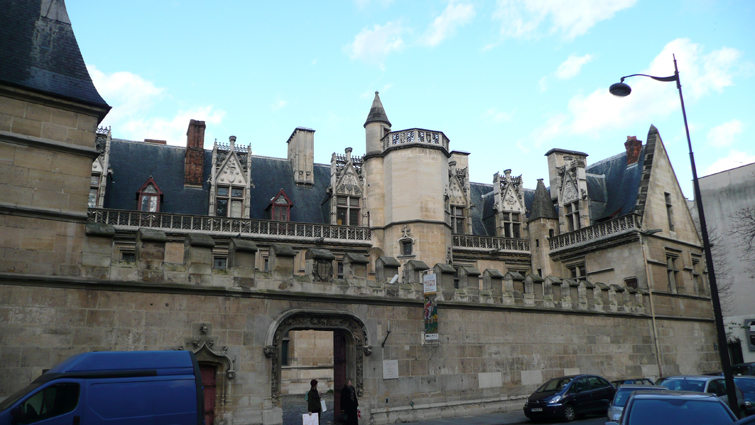
Among the residents of the house was Mary Tudor, sister of Henry VIII of England. She was installed here after the death of her husband, Louis XII, by his successor Francis I of France in 1515. Later residents included Joseph-Nicolas Delisle and Charles Messier.
Joseph-Nicolas Delisle
Joseph-Nicolas Delisle was one of the eleven sons of Claude Delisle (1644-1720). Like many of his
brothers, he initially pursued classical studies, but soon moved into astronomy. He studied under
Joseph Lieutaud and Jacques Cassini, and joined the French Academy of Sciences as a student of
Giovanni Domenico Maraldi (1709-1788). Although he came from a wealthy family and was a
capable scientist, he didn't have much money of his own.
His life changed radically when he was invited by Russian Tsar Peter the Great (1682-1725) to
join the school of astronomy in St Petersburg. He arrived in 1726, after the tsar's death. There
he became famous and wealthy - which made it possible, on his return to Paris in 1747, to build
his own observatory on the stairwell tower of Hôtel de Cluny.
This mansion would later become famous through Charles Messier.


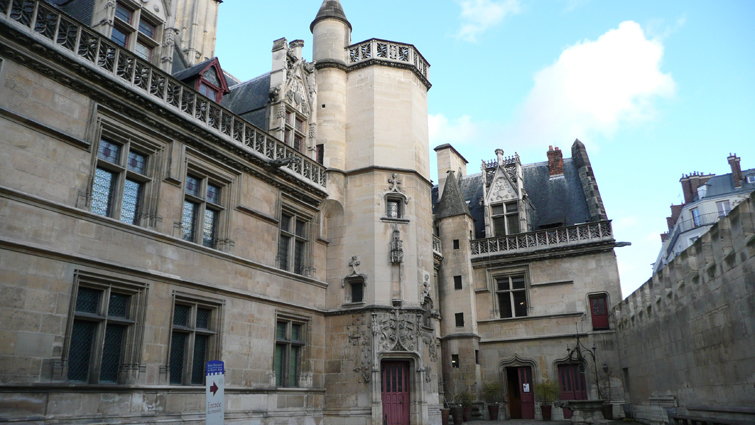
As you pass through the gate into the inner courtyard, you immediately see the stairwell tower where the observatory once stood. On the far right is the entrance to the hôtel, now a museum. Not visible on the photo above, but visible in the one below, is the old monastery to the left.


On the right side of the stairwell tower, a beautiful sundial is carved into the sandstone
wall.
A little further to the right, next to the window (of which you only see a part), is another
sundial. Unfortunately this second one is incomplete.
The walls are decorated with scallop shells - an early Christian fertility symbol - and garlands.


Above: a real gem of a sundial, dating from 1674. It was already a hundred years old when
Messier began his observations.
On the left, the incomplete sundial.
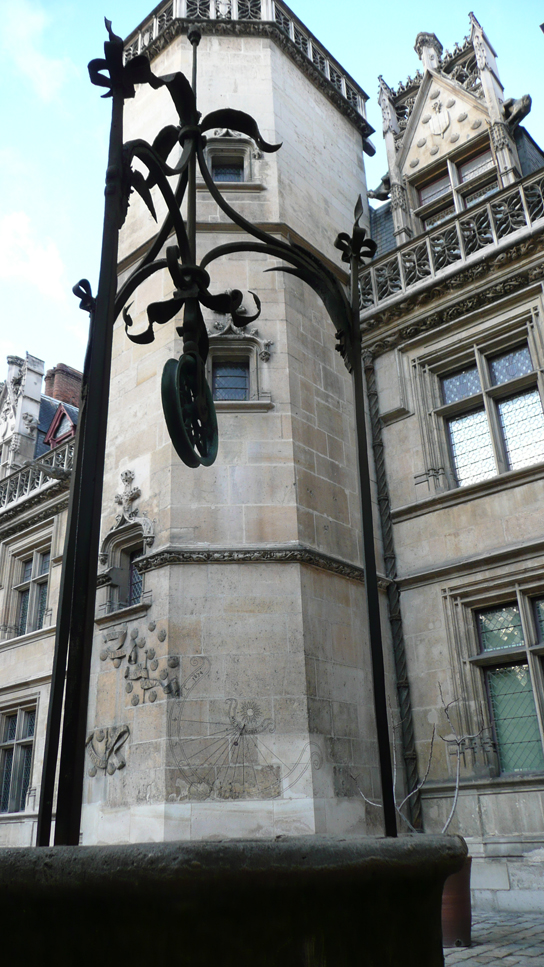
An old well in the inner courtyard.

This is the top of the stairwell tower where the observatory once stood. It's accessible via an outside door and through the hotel lobby - unfortunately closed to the public.
Charles Messier - Early Life
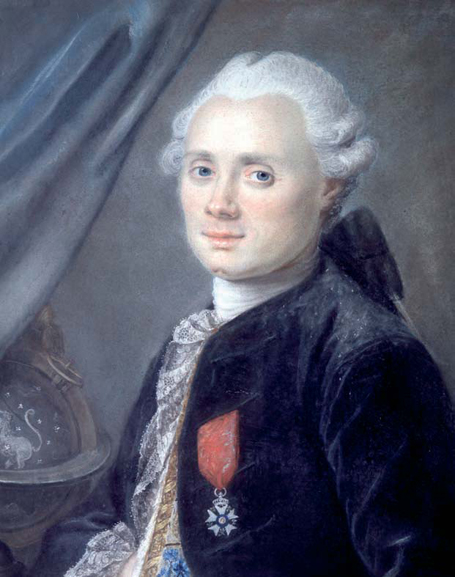
Charles Messier, 1730-1817, pictured here at roughly 40 years old.
Messier was born in 1730 in Badonviller, in the Lorraine region of France. He was the tenth of
twelve children. Charles' interest in astronomy was sparked by the appearance of a spectacular,
large six-tailed comet in 1744, and by an annular solar eclipse visible from his hometown on
25 July 1748.
In 1751 he entered the service of Joseph-Nicolas Delisle, an astronomer of the French navy. His
job was to record and administer Delisle's observations. Messier's first documented observation
was the transit of Mercury on 6 May 1753.
Delisle was childless and took the young Charles under his wing, letting him live with him. He
taught Messier his first astronomical skills.
Messier turned out to be an excellent observer.

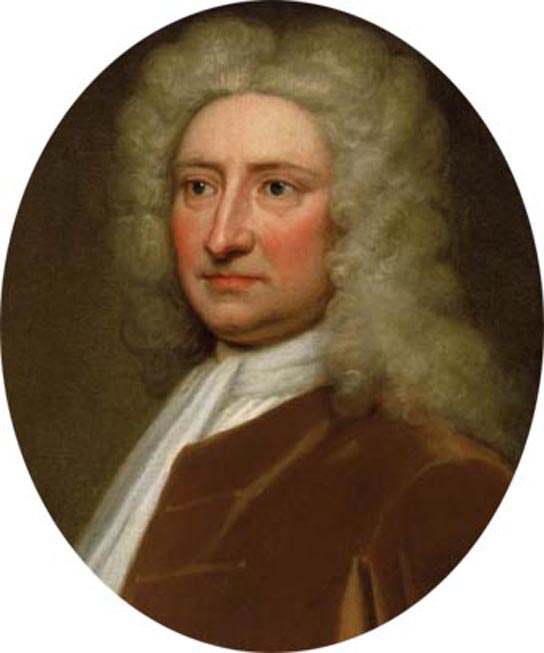
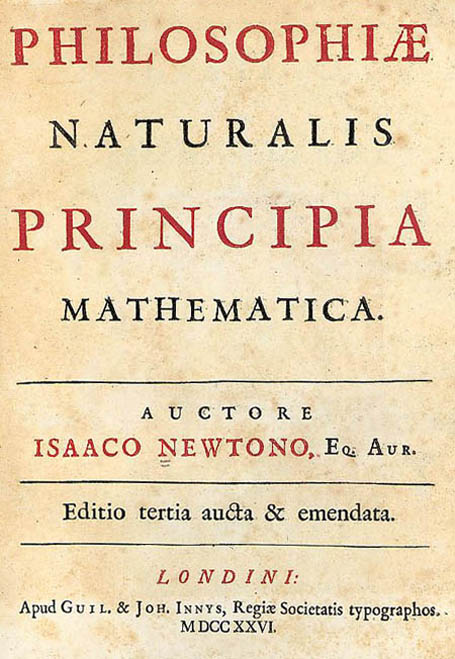
Edmond Halley, a British astronomer, calculated - after studying Newton's Principia - that the
comet of 1682 would return in 1758. He was the first to successfully predict the return of a
comet.
Delisle wanted to beat the Paris observatory to the punch with observations from his own private
observatory on the stairwell tower. He hoped his protégé would be the first to spot the comet.
The Hunt for Halley's Comet, and the Discovery of M1
Delisle calculated two viewing windows in which the comet should become visible. In mid-1757,
Messier was assigned to search for it there.
On 21 January 1759 he spotted a faint glow that resembled a comet he'd also seen the previous
year, but which back then had not fallen within Delisle's calculated windows. It was the comet!
Had he searched outside the calculated windows earlier, he would have discovered it much
sooner.
He later learned that a German amateur astronomer, J.G. Palitzsch, had beaten him to it - he had
already discovered the comet on Christmas night of 1758.
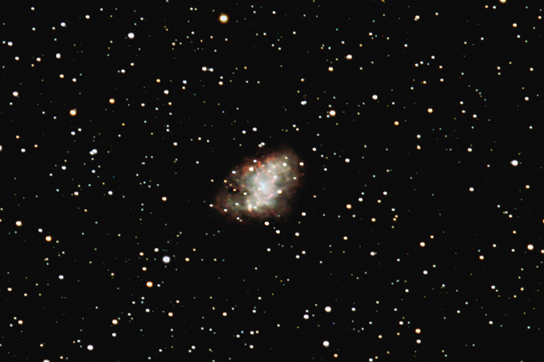
Messier threw himself into comet-hunting and was the first to systematically sweep the sky. He kept spotting non-stellar, nebulous objects that - unlike comets - didn't move against the background stars. This tripped him up time and again.
One such object he believed to be a new comet, found in the constellation Taurus near Zeta Tauri. When it turned out not to move, he decided to catalogue this troublesome object instead. He named it Messier 1 (M1). Today we know it as the Crab Nebula, the remnant of the supernova of the year 1054.
The Messier Catalogue

On the left, the first page of the Messier catalogue.
Three versions of the catalogue were published:
V1: objects 1 through 45
V2: objects 1 through 68
V3: objects 1 through 103
Objects 104 through 110 were added later.

Here you are, standing on historic ground, in front of a historic building.

Messier had no interest whatsoever in stars and nebulae in the sky. His interest lay entirely
with comets. It's rather ironic, then, that he didn't become famous for his 14 comet discoveries,
but for a list of objects that had simply confused him. That catalogue is still used today by
every amateur and professional astronomer alike.
The catalogue consists of:
- 28 open star clusters
- 29 globular star clusters
- 40 galaxies
- 6 galactic nebulae (clouds of dust and matter in the spiral arms of galaxies)
- 4 planetary nebulae
- 3 other objects
Nearly all of these objects are gems in the sky, observable with simple equipment and sometimes
even with the naked eye.
In 1764, Messier became a Fellow of the Royal Society. In 1769, he was made a foreign member of the Royal Swedish Academy of Sciences. On 30 June 1770, he became a member of the French Academy of Sciences.
Messier's Later Years

In 1770 he married, and moved with his wife into a room at Hôtel de Cluny, just a few steps from
the observatory.
His first catalogue was published in 1771.
In 1772, his wife died in childbirth; their newborn son died ten days later.
From 1780, after the publication of the second version of his catalogue, he no longer undertook
systematic searches.
On 13 April 1781, he made his final catalogue observation (M100).
The third and final version was published that same year. That same year, he was also badly
injured falling down a cellar staircase. It took him a full year to return to the observatory,
and he walked with difficulty for the rest of his life. When the French Revolution broke out in
1789, things became rather more difficult for the observatory too.
The structures of the Royal Navy (his employer) became increasingly opaque, maintenance on the
observatory lapsed, and budgets were cut everywhere. By 1793, these problems had mostly been
resolved.
In 1801, at the age of 71, he made his final comet discovery. For the rest of his life he lived
off his reputation, which also earned him favour under the new regime (Napoleon).
His eyesight kept deteriorating, and from 1808 onward he could no longer read or write. In 1817
he also developed dropsy, and died on 11 April 1817, aged 84.
Legacy
His name lives on in:
- The Messier catalogue.
- Two craters on the Moon: Messier and Messier A.
- Asteroid 7359 Messier (1996 BH), a minor planet in the belt between Mars and Jupiter,
discovered on 16 January 1996 by Miloš Tichý at Kleť.
The Belgian DeepSky Log
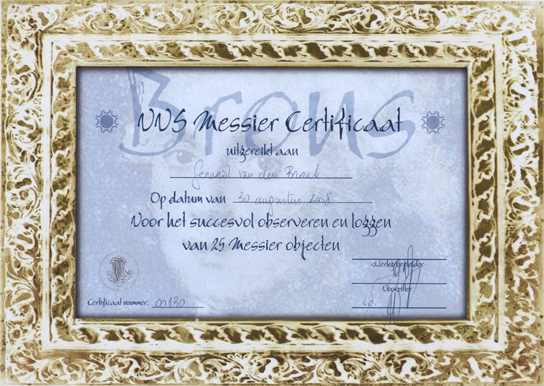
The Vereniging Voor Sterrenkunde (VVS), the Belgian astronomical society, facilitates - among other things - the DeepSky log. This is a site where anyone can log their observations, together with the equipment used and the observing conditions. Around 200 observers currently take part.

Anyone with an interest can browse the database. It lets you find out what you, with your own equipment, should be able to see. It's also very informative to read what others have observed of an object you're interested in.

Once you reach 25 logged Messier observations, you receive a bronze certificate; at 50, a silver
one; and at all 110, a gold one.
The first 50 come fairly easily. Observing all 110 objects takes real effort - some are only
reasonably visible if you're a bit further south in Europe.
The remedy: bring your telescope on holiday!